
The “Bestie Zone”: How to Become the Home Care Referral Partner They Text First
Dawn FialaHome Care Expert, Sales and OperationsSeptember 18, 2026
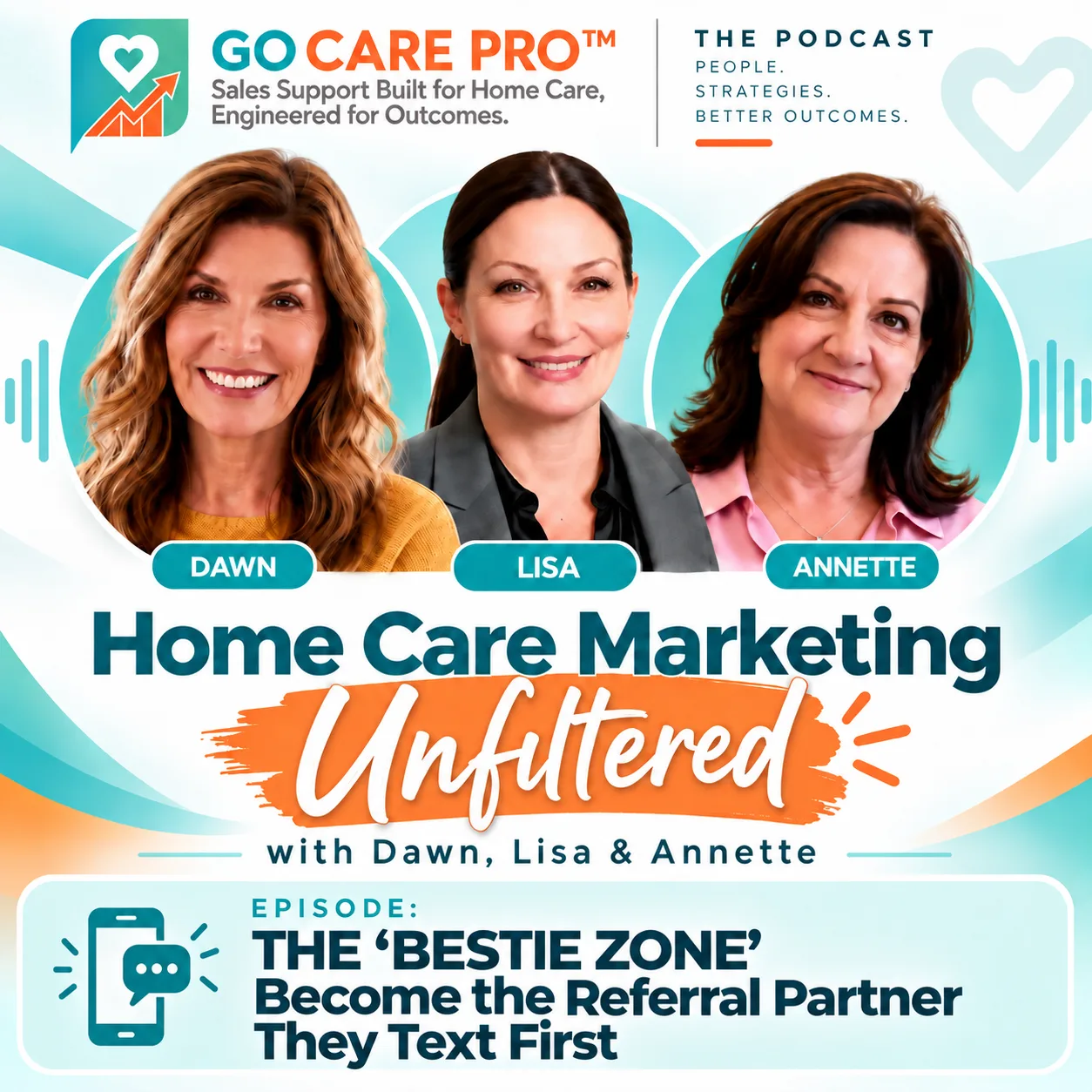
Listen to the Podcast Here: https://podcasts.apple.com/us/podcast/home-care-marketing-unfiltered-how-to-get-in-the/id933678323?i=1000790424911
In home care referral marketing, one of the most valuable places you can be is not at the top of a vendor list.
It is in a referral partner’s phone. That is the relationship home care referral development is built to produce.
When a hospital case manager, social worker, discharge planner, or senior living professional feels comfortable texting you directly, the relationship changes. Communication becomes faster. Conversations become easier. Referrals can move forward without playing phone tag.
As the Home Care Marketing Unfiltered team calls it, you have entered the “bestie zone.”
But getting there takes more than handing someone your business card and asking for referrals. You have to earn the right to become the person they contact first.
Texting makes the referral process easier
Home care referrals frequently involve urgent situations.
A patient may be discharging from the hospital that afternoon. A family may suddenly realize that an older adult cannot safely return home alone. A senior living community may need additional support arranged quickly.
When time matters, people naturally choose the easiest path.
If a referral source can send you a quick text but has to call several other agencies, leave messages, and wait for someone to respond, who do you think they are most likely to contact first?
The person who is easiest to reach.
Being available by text does not automatically make someone choose your agency. You still need to provide excellent service, respond quickly, and demonstrate that you understand home care. But when everything else is equal, convenience can make a tremendous difference.
A simple text such as, “Are you available today?” can quickly become a phone call, an assessment, and a new client.
Make it clear that referral partners can text you
You do not necessarily need to ask every new referral source for their personal cell phone number. In fact, doing that too early can feel intrusive.
Instead, make your own number available.
Include “Call or text me” on:
- Business cards
- Referral leave-behinds
- Educational materials
- Follow-up emails
- Event invitations
- Your email signature
You can even make it feel a little special:
“I don’t normally share my cell phone number with everyone, but I want you to have it. If you ever need anything, you can call or text me directly.”
This gives the referral partner control over how and when the texting relationship begins.
Once someone does text or call you, save their name immediately. That small habit makes a surprisingly strong impression.
The next time they call, you can answer by name instead of responding with a generic hello. It communicates that you remember them, value the relationship, and are paying attention.
Give people a natural reason to text you
Sometimes the easiest way to open a texting relationship is to create a reason for the referral partner to contact you.
One example discussed in this episode is a pumpkin decorating contest for referral partners.
Each office or department receives a small pumpkin to decorate. To enter the contest, the team texts a photograph of the finished pumpkin to the home care representative.
It is simple, fun, and highly effective.
The activity gives the entire office something to do together, and it naturally opens a direct communication channel. Once the referral partner has texted you, future communication feels much more comfortable.
The Home Care Marketing Unfiltered team has seen referral partners create elaborate pumpkins with eyelashes, costumes, moving parts, and even masks during the pandemic. Some offices begin asking about the contest months in advance because it has become something their team looks forward to.
That is what good referral marketing does. It creates memorable experiences and genuine relationships instead of another forgettable sales visit.
Thoughtful gestures strengthen the relationship
Once you have established a comfortable texting relationship, you can occasionally use it to make a thoughtful connection.
For example:
“I’m in your area and stopping for coffee. Are you working today? Can I bring you something?”
It does not need to happen frequently, and it should never feel excessive or transactional. The goal is not to buy referrals. The goal is to show that you remember the person and enjoy staying connected.
Learning someone’s favorite drink can be especially memorable. In the episode, Lisa shares how a tiramisu latte became one of her signature relationship-building touches. When she was heading into an area, she could text a referral partner and offer to bring one.
Over time, these small interactions changed how she was received.
Instead of being treated like an outside salesperson who had to wait at the front desk, she became a trusted professional who was welcomed into the building. Staff knew who she was. Referral partners were comfortable letting her know where to go and who needed help.
That level of access was not created by coffee alone. The coffee simply reinforced a relationship that had already been built through reliability, responsiveness, and expertise.
You must earn the “bestie zone”
Having someone’s cell phone number does not make you a trusted referral partner.
Trust comes from proving that you know what to do when they call.
Healthcare professionals often need help having difficult conversations with patients and families. They may recognize that an older adult should not return home without support, but they do not always have the time—or the desire—to explain home care, overcome resistance, and help the family make a decision.
That is where a strong home care professional becomes invaluable.
A referral source wants to be able to think:
“If I call Lisa, she will know how to handle this.”
That is a much stronger position than simply being known as the person who drops off brochures.
Handling the difficult home care conversation
In the episode, the team shares a story about a social worker who sent a text saying:
“I’ve got a doozy for you. You said you could do this.”
The prospective client did not want home care and made that very clear. She told the home care representative to leave her room—more than once.
Instead of arguing, applying pressure, or giving up, the representative continued asking thoughtful questions.
Was there anyone in the building the woman liked?
What did she appreciate about that person?
What kind of personality would she tolerate in her home?
The woman explained that she liked one particular nursing assistant because she did not waste time chitchatting. She came in, got to work, and respected the woman’s preferences.
That became the opening.
The conversation shifted from “I do not want a caregiver” to “This is what I would want someone to do.”
Rather than demanding a long-term commitment, the representative proposed starting with a few days of help and seeing how it went. By listening carefully and responding to what the woman actually valued, she was able to create a plan the client could accept.
That is expertise.
It is also why the social worker trusted her with a difficult situation. She knew the representative would not simply deliver a brochure and walk away. She would have the conversation, identify the real objection, and help the patient consider a workable solution.
Become a resource, not just a marketer
The ultimate goal of referral marketing is to become a trusted resource.
A trusted resource can:
- Explain home care clearly
- Respond quickly when a need arises
- Speak confidently with resistant families
- Recommend an appropriate starting point
- Set realistic expectations
- Follow through after the referral
- Communicate professionally with everyone involved
Referral partners remember the people who make their jobs easier.
They remember who answers the phone.
They remember who arrives when promised.
They remember who can walk into a difficult room, build rapport with a reluctant patient, and help the family take the next step.
Once you consistently demonstrate those abilities, you are no longer “someone from a home care agency.” You are the person they trust to handle the home care conversation.
Protect professional boundaries and patient information
Direct communication should always remain professional.
Use texting for appropriate business communication, respect the referral partner’s time, and do not overwhelm them with unnecessary messages. If they provide a personal number, treat that access responsibly.
Patient information must also be handled through methods approved by your organization and the referring organization. Standard consumer texting may not be appropriate for protected health information. Follow your agency’s privacy policies and use secure, HIPAA-compliant systems whenever sensitive information is involved.
Convenience should never come at the expense of confidentiality.
How to become the person they contact first
Getting into the “bestie zone” does not happen through one clever campaign or one cup of coffee. It happens through a series of small, consistent actions:
- Make it easy for referral partners to call or text you.
- Save their information immediately so you recognize them.
- Respond quickly when they reach out.
- Create natural, enjoyable reasons to stay connected.
- Learn what matters to each referral partner.
- Demonstrate that you understand home care.
- Become skilled at difficult patient and family conversations.
- Follow through every single time.
Do those things consistently, and the relationship will change.
You will stop feeling like a marketer trying to get through the door. You will become the trusted home care expert they invite into the building—and the person they text when they need help.
Ready to strengthen your home care referral relationships?
GoCarePro® Sales Training helps home care teams build stronger referral relationships, improve their sales conversations, and become the trusted resource healthcare professionals contact first.
Learn more about GoCarePro Sales Training.
And be sure to follow Home Care Marketing Unfiltered for more honest conversations about what really works in home care marketing, sales, and growth.